


Neurological Differences Between Early Humans and Modern Humans
- Ada Özel

- Dec 20, 2025
- 3 min read
The human brain has gone through major transformations throughout evolution. Early human species and modern humans share the same general structure, but their brains differ greatly in volume, neural connections, and cognitive capacity. These neurological differences developed gradually and mark the transition from early tool-using hominins to fully modern humans.
One of the most profound changes that have occurred in human evolution is brain size, which has increased. The brain size of early humans, such as Homo habilis and Homo erectus, was between 600-900 cm³, while modern humans average 1,300-1,400 cm³. This increase happened mainly in the prefrontal cortex, responsible for planning, impulse control, and decision-making. More specifically, this led to the ability of modern humans to reason abstractly and solve more complex problems. The development

in the prefrontal cortex likely marks the base for advanced social behavior and long-range planning-traits which, according to Dunbar (2016), early humans had only in more basic forms.
Another significant neurological difference is language. Modern humans possess more developed forms of Broca's area and Wernicke's area, which are responsible for speech production and language understanding. Although early humans were able to communicate, most researchers believe that the language of early humans was primitive and grammatically simple. Lieberman (2007) writes that modern humans developed more powerful neural connections between these language areas, enabling symbolic thinking, story-telling, teaching, and cultural transmission. These cognitive advances were necessary in order to cooperate and survive in larger groups.
As the brain expanded, so did the hippocampus and other cortical memory networks. Early humans learned primarily through imitation and simple trial-and-error. However, modern humans are able to store immense amount of information, conceptualize distant futures, and transmit knowledge across generations. These enhanced memories, according to Mithen (1996), allowed humans to develop art, religion, agriculture, and more complex tools. This would therefore imply that the changes occurring in the neurological spheres were not just a matter of size, but actually one of more efficient and interconnecting memory systems that supported cultural evolution.
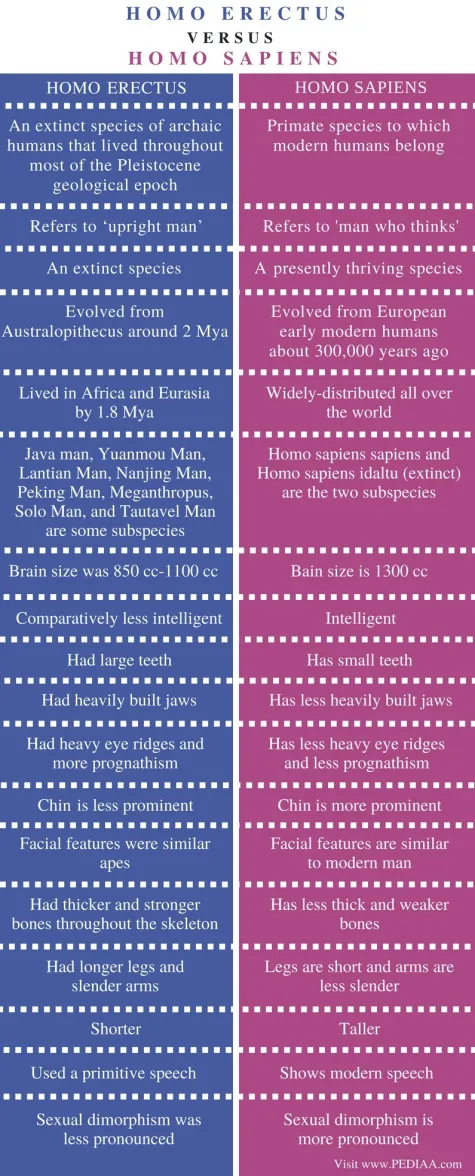
Human evolution also reveals major changes in those parts of the brain that deal with social and emotional understanding. While early humans lived in small groups and led simpler social lives, modern humans develop larger networks in the temporal lobe and orbitofrontal cortex that enable us to read emotions, understand intentions, and follow social rules (Adolphs, 2009). With such abilities, humans were capable of cooperating in much larger groups. According to Dunbar's Social Brain Hypothesis, as group size increased, it became necessary for the brain to expand in order to handle more relationships and social complexity (Dunbar, 2016). This expansion in brain size supported empathy, teamwork, and the structuring of communities.

Modern humans also exhibit higher neuroplasticity, that is our brain adapts and changes rather easily. Such cognitive flexibility supports the learning of languages, the invention of tools, and adaptation to new environments. Early humans were innovative in their time, but the neural networks of their brains were less dense and less effective. Coolidge and Wynn (2009) believe that this flexibility is one of the major reasons why Homo sapiens outcompeted Neanderthals and other species of hominins. It enabled our ancestors to survive changes in their natural environment and to begin developing new technologies. In the end, it is not just about brain size in early humans and modern humans; what transformed human evolution was the development of more sophisticated and connected brain regions. Growth in the prefrontal cortex, improvements in language areas, expanded memory systems, and a more socially focused brain all played their significant roles. These changes helped create culture, build societies, and thereby develop technology. Studying these differences
helps us understand how our minds became capable of this complex world we live in today.
References
Adolphs, R. (2009). The social brain: Neural basis of social knowledge. Annual Review of Psychology, 60, 693–716.
Coolidge, F. L., & Wynn, T. (2009). The Rise of Cognitive Fluidity in Modern Humans. Oxford University Press.
Deacon, T. (1997). The Symbolic Species: The Co-evolution of Language and the Brain. W.W. Norton.
Dunbar, R. (2016). Human Evolution: A Pelican Introduction. Pelican Books.
Lieberman, P. (2007). The evolution of human speech: Its anatomical and neural bases. Current Anthropology, 48(1), 39–66.
Mithen, S. (1996). The Prehistory of the Mind. Thames & Hudson.


